Tosca Says...

"It is the food that we eat which is responsible for shaping such a vast array of body types. Yes, the food!" - Tosca Reno, Author of The Eat Clean Diet

Wednesday, April 3, 2013

Clean Eating For the Food Lover Basics Workshop!

It's here! My Clean Eating For the Food Lover Basics Workshop is all set for May 4th! Space is limited so register today! Here's the 411:


Eating Clean doesn't mean you have to sacrifice flavor! Join me for an afternoon of deliciousness as we talk about the basics of Clean Eating. Topics of discussion will include: - What it means to eat clean and why I do it. - The first five things to change now (and you might just lose 10 pounds for it!) - The problem with plants (of the warehouse kind.) - Treating versus cheating. - Why clean-eating is not a diet. - Recipes for the Food Lover - Much More! 

When:     Saturday, May 4th 11am-2pm
Where:   Faithful Hearts 
                600 Gathering Park Circle, Suite 103
                Cary, NC 27519
Cost:       $35/per person

A clean lunch and clean snacks are provided! 


Saturday, February 23, 2013

Recipe: Clean Eating Meatloaf

Before I started eating clean, I could make a killer meatloaf. I probably made it weekly when my son was a toddler. (It was, by far, his favorite dish!) No recipe. Just the BGABG method (that's "by guess and by gosh"- in case you're wondering - and my grandmother's favorite way to cook.)

Even before I knew what clean eating was I had vowed to stay away from ground beef, thanks to watching this clip from Jamie Oliver's "Food Revolution." (Warning: This video will probably turn your stomach. It did mine, at least. You may want to watch it before consuming a large meal.)

The alternative to buying your ground beef pre-ground, and the only way to guarantee your beef is "slime"-free, is to have it ground by a butcher right in front of you. You pick the cut, ask them to grind it and they will, free of charge. But even the leanest of cuts aren't has good for you as my preferred alternative: bison.

If you've never had bison, I implore you to try it. Soon. Order a bison burger next time you're at a restaurant that offers it. (Generally, a restaurant that has bison on the menu will do a really great job preparing it, so I'm pretty sure you won't be sorry!) Let me know how that taste test turns out for you.

I tell you all of this as a basis for the recipe below; because, since I don't use ground beef anymore, the recipe calls for - you guessed it - ground bison! I find it at my local Harris Teeter, BJs or Whole Foods. It's definitely more expensive, but I'd rather spend more on quality and nutritious than pennies on slime. As with most things, you get what you pay for. Just sayin'.

I'd love to hear how you like this recipe! If you make it, drop me a note to tell me how it was!

Recipe: Clean Eating Meatloaf
Serves: 6-8
Nutritional Info (Per Serving, based on 8 servings)
Calories: 315
Carbs: 13
Fat: 19
Protein: 25

Ingredients:
2 pounds Ground Bison
2 Tbsp Balsamic Vinegar
2 Large Eggs, beaten
3 oz. Greek Yogurt, Plain
1 Cup Chopped Onion
1 Cup Brown Rice, Cooked
2 tsp Sea Salt
1 tsp Ground Pepper
1 tsp dried basil
1 tsp dried oregano
1 tsp dried ground garlic

Directions:
Preheat oven to 350 degrees. Lightly coat a standard loaf pan with olive oil. Put all ingredients into mixing bowl except bison. Mix well. Add bison and mix together until incorporated. (When working with raw ground meat, I wear disposable plastic kitchen gloves. Just FYI.) Put mixture into loaf pan and bake at 350 degrees for 1 hour, or until center measures at least 165 degrees. (I actually cook mine to around 175 degrees.) Let sit 5-10 minutes before slicing and serving.


Note: I end up with quite a bit of juice on the bottom half of the loaf pan. You can either drizzle this on top once you have plated your serving(s) or, do like my kids, and top with ketchup. While not necessarily clean, I make sure to have an Organic Ketchup available without any HFCS (high fructose corn syrup.)

Enjoy!


Tuesday, January 15, 2013

Treating or Cheating? And My Post-Holiday Hips.

Well, it's January and, as usual, my jeans are a leeeeeetle tighter than they were in November. This was my second holiday season as a Clean Eater and, well, let me just say that I still fall off the clean-eating wagon!  I mean, how can I turn down my grandma's strawberry rhubarb pie (a classic favorite I look forward to ALL year long) or those Christmas cookies my daughter so beautifully decorated just for me? I can't disappoint them and make all that hard work for naught, right!

Throughout the majority of my clean-eating journey I have done very well staying away from refined sugars, processed foods, white pastas, white flours etc etc and my tummy has thanked me! But this holiday season, little sporadic treats turned into bigger more regular cheats and, well, the snowball effect got the better of me.

Despite my venture off the wagon, however, I will say that I did not gain back nearly as many pounds as I thought I would! (This, proven by the fact that my daughter still claims my hips still don't "jiggle" anymore.) So while I may have internally paid for my relatively minor indulgences, the scale still shows a marked weight loss from when I started eating clean over a year ago. And the people cheered "Hooray!!"

I attribute this success to two things:
  1. Besides the actual holiday eating binges we all find ourselves succumbing to on Thanksgiving and Christmas (and the yummy leftovers, therein) I did spend the majority of the holiday stuck to the main principles of not eating processed foods or the five evil whites (white sugar, white flour, white pasta, white rice, iodized salt. (See previous post here.)
  2. Despite my tendency to overeat at holiday meals, I did a fairly good job at sticking to my clean-eating portion sizes (palm of your hand for proteins and less than the size of your fist for everything else. And we will just overlook the fact that there were about three times as many side items on my plate as there usually is. Hey, I stuck to the portion size!)
It's January 15th and I am still trying to wean myself off of all those naughty no-nos and back into a healthy mode of clean eating. It's not easy, but my tummy continues to remind me of why I started eating clean in the first place. But you're not here to hear about those fun details. So here are my thoughts on the difference between treating and cheating.

Treating - Eating clean does not necessarily mean everything you eat is low fat or good for you. There are plenty of foods that can be considered "clean" that aren't nutritious by any means. But some goodies are clean as far as ingredients go, and those I consider "treats." Case in Point - One of my favorite treats are these: 

Justin's Organic Peanut Butter Cups. I get these at Whole Foods and you can find details here. Ingredients are all, technically speaking, clean (and organic, fair trade, and Rainforest Alliance Certified to boot!) But that doesn't mean they are any more nutritious than a greasy processed potato chip. One package (two cups) of these dark chocolate beauties will set you back 200 calories and 16 grams of fat! Yowzers! At the end of the day, though, I feel much better about eating these than I do a regular Reese's PB Cup so I count that as a WIN!

Cheating - Everything else. Quite possibly, everything you used to eat. It's really as simple as that. All the processed junk you consumed before eating clean (or maybe still do from time to time) counts as a cheat. If you're eating clean to lose or maintain a certain weight, it's cheating that will slow or regress your weight loss progress the fastest. And I disagree with the phrase "anything in moderation." Portion sizes don't matter when what you're eating is toxic, and even the smallest of cheats can set your tummy on an anti-clean roller coaster that can last for days. Avoid cheating as much as possible. Your tummy (and your hips) will thank you!

What percentage of your clean-eating lifestyle is treating? What percentage is cheating?  What are your favorite treats?

Thursday, January 3, 2013

Kale Chips - The simplest snack you'll ever not fry.


For months, I kept hearing various people raving about kale chips. Apparently, it was a fad of sorts that I, as usual, was the last to know about. Like planking. Or being Vegan. Or shopping on Black Friday. I admit it. I'm slow to catch onto these things.

Luckily around the time I got a hankering to try making my own batch, a friend shared what she had heard about making them. So I found some courage and picked up some kale on my next rip to the grocery and gave it a shot.

WARNING: This method is so simple, you might think you've misread the instructions. You haven't.

SECOND WARNING: While these chips will stay fresh for several days in an airtight container, you'll be lucky to have leftovers to put in one.

DISCLAIMER: This is more a method than a recipe. I use all ingredients to my own taste and experiences. I encourage you to do the same, and think you'll figure out your own personal "recipe" after a time or two. 

Ingredients:

Olive Oil
Sea Salt
Fresh Kale - As much as you care to bake. For a crisper chip, I recommend leaves with tightly bunched edges, like these: (A flatter leaf will yield a chewier leaf)


Preheat oven to 350 degrees.

Step 1: Wash and pat to dry. When dry, tear leaves from the stalk and into moderately-sized pieces and toss into large bowl.

Step 2: Drizzle with olive oil and toss to coat. I just toss with my hand until all pieces are completely coated. 


Step 3: Spread onto non-stick baking sheet or sheet lined with parchment paper. Sprinkle with sea salt.


Step 4: Bake for about 10 minutes, give or take, until crispy. Watch them closely and remove from the oven as soon as the edges begin to brown. Once they become crisp, they will scorch quickly so keep watch.

Step 5: Enjoy!


Monday, September 3, 2012

If It Doesn't Rot...

I'm sure by now you've heard about all the (mind you, unofficial) "tests" that claim to show how a fast food burger (and sometimes it's accompanying fries) never rots. Recently, this picture came across one of my social media feeds:

Um, blech.

In the interest of providing an informed and non-biased approach to the non-rotting hamburger conversation, might I recommend you read this fantastic scientific experiment by J. Kenji Lopez-Alt. He is a self-proclaimed "part mad scientist, part chef" who looks at the science behind our everyday foods, and did this experiment in response to other similar (but obviously biased and completely non-scientific) ones. 

If you don't have time to read through it all, I'll give you the nutshell version. Basically, his (incredibly thorough and scientific-in-method) experiment showed that it wasn't just the fast food hamburger that failed to decompose. The hand-ground burger didn't either. Anti-fast food and health food fanatics shuddered at these results, I'm sure, and were probably sent scrambling to disprove his experiment but, as far as I can tell, none have been successful. 

Rest assured, I don't think Kenji did this experiment to prove that eating a fast-food burger is a truly healthy choice. His experiment really only touches on a few of the facets of what contributes to the decomposition (or lack thereof) in the subjects he used. It did not take into account (as far as I can tell) any chemical make-up (artificial or otherwise) that might have contributed to the burgers' preservation (such as any added hormones or what the cow that ultimately became these burgers was fed.)

Recently, a friend of mine tweeted this statement upon leaving the drive-through: "Every time I eat at [a fast-food restaurant] all I can think is, 'that should not have happened that quickly.' "

I concur. Have you ever pondered what makes something "fast food?"

There's a saying that has been discussed in books and on blogs at length lately (meaning, in the past few years) that basically states this: Eat what your grandmother (or great-grandmother, depending on your age) ate, and nothing that she didn't.

I tend to both agree and disagree with this sentiment. I'll save my thoughts on the former for another post. For now, I want to focus on the latter: What grandma NEVER ate.

There are a lot of things grandma never ate and a lot of reasons for it. Either it wasn't feasible or accessible (financially or otherwise), or it didn't exist

Think about what didn't exist at the time your grandmother (or great-grandmother) was growing up. I don't know about you, but my grandma didn't have things like potato chips or mac-n-cheese in a box. She didn't have frozen "TV" dinners and she most certainly didn't have a microwave!  

So what do potato chips, TV dinners, and boxed macaroni and cheese have in common? They all came about with the invention of artificial chemical preservatives. At the time, with no real scientific evidence to prove any harmful effects, this invention was brilliant. Food could be enjoyed long after it was "produced" without worry of harmful bacteria, spoilage, or illness. The food industry suddenly had the potential to greatly increase their marketability to potential consumers who lived a far greater distance than their product's life could naturally withstand. Stay-at-home mom's meal preparations were instantly simplified. Astronauts would have food to eat in space.  A snowball effect ensued. More available and longer-lasting products meant the need for a bigger marketplace (leading to the SUPERmarkets we know today) which led to more consumers which led to the need for more (preserved) products. And on and on and on....

And now what do we (as in, the United States) have?  Health problems that didn't exist before artificial preservation and the highest obesity rate in the world (see report here.) Not only do we have the highest rate, we beat out the #2 spot by a bigger margin than any other concurring countries.

Coincidence? I don't think so. 

This leads me to challenge you to ponder this thought:
If it doesn't rot, 
can it be considered real food?

And if it's not real food,
do I really want it in my body?
(No matter how good it tastes.)

80% of what you see in the mirror is a direct result of what you are putting INTO your body. This means only a small amount of what is being reflected back at you on any given day can be contributed to genetics and/or one's exercise routine (or lack thereof.)

Credit: Google Images; heyyougetreal.com


Credit: Google Images; dashingdiva.net
                   
So what's a person (or country) to do? How do we fight back? 

The answer might seem as complex as the chemicals that make up your favorite snack-in-a-bag. But it really is simple. 

We change our purchasing and eating habits (and that of our families) first. We focus on learning as much as we can about the benefits of eating real food (and the detriments of everything else, if you dare.) We work to replace our favorite chemically-laden foods with real alternatives. Then we let the ensuing transformations speak for themselves. Others will start asking questions. And we'll share with them what we know and how we are doing it. And they will eventually and inevitably follow. And on and on and on...

In essence, we start our own snowball effect. 

Friday, August 10, 2012

Recipe: Clean Eating Rhubarb Lime Ice Pops

I. LOVE. Ice Pops. (I could say I love "Popsicles" but, technically, that's a name brand, so I'm going to stay generic and go with ice pops.) 

They really are a weakness for me (and not just in the summer.) So when I started eating clean, I had a hard time figuring how I was going to get through my impending withdrawal. Needless to say, it's been a rough 13 months. (And, yes, I cheated. Several times. A month. Don't judge.)


Recently, (because my kids take after their mom and eat ice pops just about every day of the year) I bought these: 


My goal was to be able to make healthy clean versions of our favorites. Usually, I fill them with the leftovers from my morning smoothie or with organic juices (with water added). I got them from Amazon (click here to get your own set) and I love them! I highly recommend them (and I highly recommend two boxes at least!)


Well, a few days ago, as I was sauntering through Whole Foods, I came across this glorious sight:


I tried not to get too excited. I've learned that just because I am standing in a Whole Foods doesn't automatically translate to "everything you see here is clean." 

I start reading the flavors, my eye immediately going to two of my favorite things in the world: rhubarb and limes. I opened the freezer door (mouth watering, mind you) and braced myself for the impending disappointment.

All Natural. No artificial ingredients. And, to quote them, "NO JUNK." 

Now, again, I've learned that the phrases "All Natural," and "No artificial ingredients," can be deceiving. So, I read the ingredients. They were all good! Score!

To make things even better, they are made in Wilmington, NC, which I consider "local" since I live two hours away. So, score again!

I brought them home (the Rhubarb Lime ones, of course), even at the outrageous price of $5.99 for 4 pops. It took some serious will power to not eat one in the car on the ride home. 

When I finally got home to indulge, they were, as expected, heavenly. Totally worth the wait. Just one big problem: what was I going to cut out of my regular grocery budget so I could buy a box of these every week. Cuz I was totally addicted after one pop. I think I need a support group.

Two days after falling in love with my Luna Pop, I was craving more rhubarb lime ice pops. But the thought of a 20-minute drive to pay $6.00 for four of them made my head hurt. So I got to wondering. Could I make them myself? 

I did. And, I gotta admit. They. Are. Awesome. So here's he recipe. Enjoy!

Rhubarb Lime Ice Pops

1.5 C. Rhubarb*, chopped
4 Limes (zest, juice, and pulp)
1/2 C. Agave Nectar
1/4 C. Evaporated Cane Juice (Add a smidgen more if you like a sweeter pop.)
2 C. Water

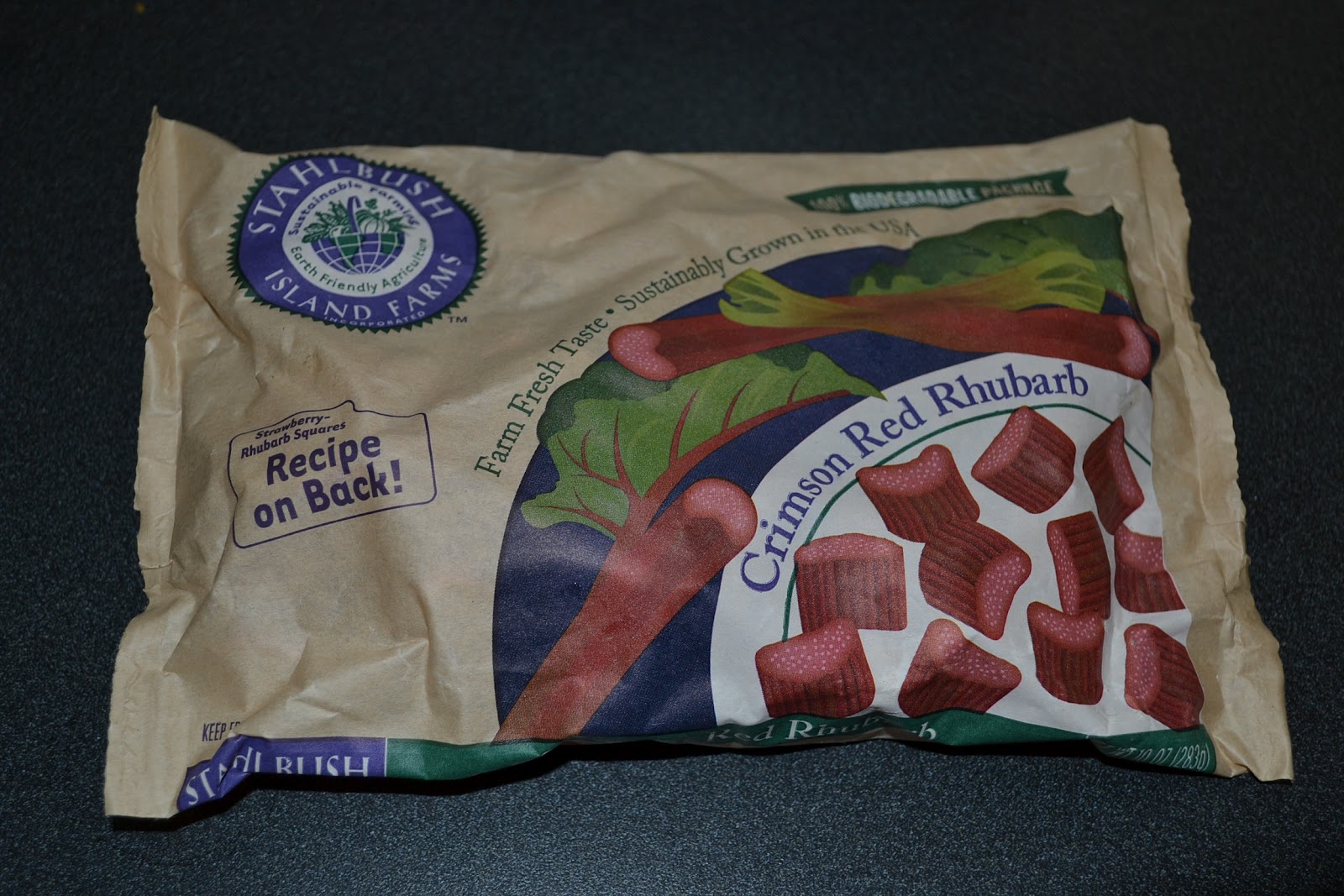
* I used Stahlbush Island Farms 10 ounce pkg, frozen.

Chill a metal bowl in the freezer. Heat all ingredients over medium heat until rhubarb is soft and sugar is dissolved. Pour through a fine strainer into the chilled bowl, making sure to squeeze out as much liquid as possible.

Chill in refrigerator 30 minutes, or until cool. (I stirred it a few times to expedite the cooling. I wanted my pops!)

At this point, you can sneak a taste to check sweetness. If too tart for your liking, add a tablespoon or two more sugar or agave. 

Pour chilled mixture into molds using a funnel. I put them in a tall metal container and they freeze perfectly (although you can lay the Norpro molds on their side. The tops are amazing and hold quite well as long as you don't overfill the mold.)

Overnight freezing is recommended, but if you're like me and can't wait for tomorrow, 3-4 hours should do the trick.

I got 7 pops with this recipe. I would have had 8, but I used the extra to make me and my son a nice refreshing summer beverage. (I just couldn't wait for the frozen version!) 

YUM!


If you've made these, tell me about it! I'd love to hear how you liked them (or, even if you didn't like them).


Recipe, content, and images, Copyright 2012, Clean Eating for the Food Lover.


Thursday, May 17, 2012

Chick-Fil-A and (gasp!) Their Hidden MSG


What? MSG in Chick-fil-A? No way, You say? Way.
Let's begin with a show of hands if you have ever avoided a Chinese Restaurant because of the rumors that have spun for the past several decades that they use MSG in their foods and you wanted nothing to do with MSG?!? Maybe you didn't know what it was, but the rumors had you panicked? Or, maybe you got an upset stomach every time you ate it so you stopped?
Ok, moving on. (You can put your hand down, btw.) Do you eat at Chick-fil-A? Burger King? KFC? If so, then you are SO consuming that MSG you've tried so hard to avoid!
For the purpose of this post, I am focusing on Chick-fil-A. The main reason is that I know a lot of people (including myself) who consider...er, considered...CFA the healthiest alternative to popular fast-food. Plus, their people are just so doggone polite. Who doesn't love CFA??
So what is MSG anyway, you ask? And is it really THAT bad for you? Uummm...yes! Ever had to run to the bathroom 15 minutes after consuming food from a food establishment? It's probably MSG.
MSG is a flavor enhancer that tricks your tongue into thinking that a certain food is high in protein and therefore nutritious. It stimulates the pancreas to produce insulin when there may not even be carbohydrates in the food you are eating for that insulin to act upon. The body also changes excess glutamate to GABA, which may be addictive. MSG can be produced using several methods, one of which is to create it chemically. As far as I have found, the FDA currently does not require food suppliers to disclose which of these methods was used for the MSG they use in their foods, nor is it likely that many food establishments know for themselves.
MSG is also a nervous system stimulant that is directly linked to obesity and diabetes and yet still has approval from the FDA. It has also been proven to negatively affect children and adults with asthma, allergies, food intolerances, digestive issues, migraines, hypertension, and depression. In fact, glutamate blockers are now being used to treat a host of diseases from Alzheimer's to Multiple Sclerosis. 
I first found out about CFA using MSG through one of my favorite clean-eating websites, www.100daysofrealfood.com. You can find the original post about it here. I. Was. Mortified! No...more like crushed! CFA was the ONE fast-food establishment I allowed myself an occasional cheat meal from. I mean, their chicken IS "100% Natural" after all, right?
While I don't doubt their claim about using 100% natural chicken, it's what they conveniently leave out that should get your attention.
The seasoning used in all of Chick-fil-A's fried chicken is the second ingredient. Of the five ingredients in the seasoning, MSG is listed second (after salt). This means there is more MSG in the seasoning than there is sugar, spices, and paprika.
On Chick-fil-A's website, they claim the "secret" to why their food tastes so good is "fresh ingredients." While this may be true for their fruits and vegetables and tea (which uses real tea leaves, not a mix, thank the heavens), it is definitely NOT true for that which is the essence of Chick-fil-A: the chicken! Bummer.
While MSG is widely used in restaurants across the world (and not just the Chinese ones-who are actually following the trend of taking it OUT of their food now), it is not widely KNOWN to their consumers. And while there are two bigger offenders of using MSG in front of Chick-Fil-A (KFC and Burger King), this petition is focused on Chick-fil-A for one simple reason. Not many people associate these other establishments as being healthier fast-food options. However, many people who do not eat at regular fast food restaurants DO eat at Chick-fil-A because of their "100% Natural" whole breast meat chicken. Drats. Duped again.
So in the interest of public awareness (and the teeniest hope that maybe CFA will take notice and make a change for the better) I started a petition on Change.org.  You can sign the petition here. The goal of this petition is not only to request Chick-fil-A to make changes to their seasoning, but to bring about awareness to those of us who have frequented and fell in love with this "healthier" alternative to typical fast food. 
Won't you let your voice be heard? Sign the petition.

Saturday, April 28, 2012

Recipe: Clean Eating Banana Zucchini Bread

I've had to take a bit of a hiatus in posting due to some health issues, but I'm going to try to get back into regular posts, especially considering SO many people have asked me about eating clean lately!

So here's a recipe to start! Made two loaves and 24 muffins today out of a double batch. They. Are. AWESOME! Enjoy!

Ingredients:
3 Cups Whole Wheat Flour
1 1/2 tsp baking powder
1 1/2 tsp baking soda
1 1/2 tsp ground cinnamon
1 tsp Sea Salt
4 eggs (or 2 eggs and 3 egg whites if you prefer)
2 Cups Evaporated Cane Juice (i.e. "Clean" Sugar)
1 Cup Canola Oil
1/2 Tbsp. Vanilla
3 Ripe Bananas, mashed (about 1 1/2 cups)
2 Cups Zucchini, unpeeled and shredded

Directions:
* In a bowl, whisk together flour, baking powder, baking soda, cinnamon, and sea salt. Set aside.

* Beat eggs/whites. Blend in Evaporated Cane Juice, oil, and vanilla. Add bananas and mix well. Stir into flour mixture until well-mixed. Gently fold in zucchini.

* Pour into two greased loaf pans. Bake at 350 degrees for 50 minutes or until toothpick comes out clean. Cool for 10 minutes. Remove from pans to wire racks and cool completely. Yields: 2 loaves. (For muffins, pour into 24 greased muffin cups and bake approximately 25 minutes, or until toothpick comes out clean.)


Wednesday, February 8, 2012

9 Facts About Soda You May (or May Not) Want to Know!

It's called "pop" in the northeast, "soda" in the south and west, and everything's a "coke" in Texas! But regardless of what you call it, they all have one very important thing in common. They. Are. BAD.

I was hoping my next post would be about sugar (see my previous post on the Five Changes to Make Right Now if you haven't read it yet!) but this one is just too important to wait. Besides, it kind of encompasses the reality of sugar in our diet so it's kind of a good pre "the-truth-about-sugar" post. Yeah, let's go with that.

Sometimes all it takes to break an addiction to something is a little knowledge. Suddenly, you realize what used to be your most loyal "friend" is really your health's biggest enemy and it's not so tempting anymore. Sometimes, it takes more than a little knowledge, especially if the addiction is chemical just as much as it is psychological (like drugs or carbs or sugar or....soda pop!) Hopefully, the 9 facts below will help put soda consumption into perspective for you.

Luckily, I didn't have a bad soda habit that needed breaking when I started to eat cleaner. But I can name countless friends and family members who just can't give it up. Well, I just came across this article that may be the bendy straw in your pop that breaks your soda camel's back. Here's hoping this post will be the kick in the butt you (and they) need to have a paradigm shift on this subject.

My sister recently (and almost completely) gave up soda. (SO proud of her!) She has replaced it with, what I think is, a BRILLIANT option as you try to break your soda habit! Whether you like soda for the taste or for the fizz, the next time you're craving a soda, reach for a Pellegrino instead! Add a little lemon or lime, and maybe even a touch of CLEAN sugar (i.e. evaporated cane juice or Sucunat), and see if it helps you to say good-bye to the enemy that is your pop, soda, or "coke."

Click the link at the end to read about each of the below, but here's a brief list of the intriguing and eye-opening facts inside (and some of them, you will notice, are not just about your health or your body. Have you ever thought about how your soda habit is affecting the environment? Neither had I. Yikes.) *Disclaimer - My comments are in ( ). These are not an official part of the article's list.


1. Weird Fat in Weird Places (I just can't help but sing Garth Brooks to this one.)
2. Diet-Soda Belly
3. Caramel Cancer-Causers
4. Accelerated Aging
5. Water Pollution
6. "Mountain Dew Mind" (after "Mountain Dew Mouth")
7. Whacked-Out Hormones (aren't we whacky enough already?!?)
8. Dead Birds (Nope. Not a typo.)
9. The side effects of GMOs (Don't get me started.)

Intrigued? Click here for the full Rodale article by Emily Main.

Wednesday, January 25, 2012

The First Five Changes to Make RIGHT NOW!

People always ask me what it means to eat clean and how should they start their eat-clean journey. It's so hard to explain clean-eating in a few simple sentences! Because there are many components to eating clean, most people make changes slowly rather than cold turkey. Don't get me wrong, I'm sure there are plenty of clean-eaters who have jumped in with both feet and begun their clean-eating journey with an obliteration of their pantry, fridge, and freezer of anything unclean in one day. That's just not me. 

I'm a work in progress. I eat mostly clean foods each and every day. Sometimes I treat; sometimes I cheat (and usually pay for it later on with a tummy ache or adventurous visit to the bathroom.) When I first started eating clean, I thought I would just jump in and make the switch with no looking back. But I soon realized I would likely achieve more success if I took it day by day and made slow consistent changes. Kind of like "grandfathering in." I grandfathered in clean foods and grandfathered out unclean foods.

Whether you are just starting your eat-clean journey or have just been thinking about it and are still on the fence, what I am about to share is a GREAT way to get started! Even if this is the ONLY thing you do on your eat-clean journey ever, removing these five items from your diet will catapult you into a healthier cleaner lifestyle. 

The following are the top five items to remove from your diet completely. But be warned! Once they're out, it's hard (and oftentimes painful-literally) to let them back in. See my cautionary statement at the end of this post.

I am confident that swapping these five items out for their healthier counterparts accounts for at least half my weight loss thus far! How do I know? Because even over the holidays and all the times since that I have cheated or treated, I have remained at the same weight (not my desired weight yet, but at the 15 pound mark thus far.) This tells me I have created a new baseline weight for me simply by changing these five things!

My plan is to go into more details of each of these items in subsequent blog posts in the coming weeks, so for now I'm just going to list them out for you with some brief insights. And you'll probably see a theme after #2.

  1. White Sugar - Get rid of it ASAP! If the ingredient label of any product states "Sugar," don't buy it/use it/eat it! Opt for Turbinado or Sucunat instead. On the ingredient list, the clean alternative to sugar will be "Evaporated Cane Juice." It's not juice; it's a crystal just like regular sugar and varies in color from semi-white to brown. Crystals range in size from fine to large like you might see atop a large muffin. The size is generally simply determined by the brand and is not labeled as such. You just need to look at it through the bag window, try them, and find your preference. 
  2. White Flour - Never eat anything made with white flour again! Opt for Whole Wheat/Whole Wheat pastry flour instead. Other alternatives include Spelt flour and almond flour. Once you start eating clean and baking some yummy things with these clean alternatives, you'll forget what white flour tasted like. To get you started, I'm going to post my Whole Wheat Clean Eating Banana Bread Recipe this week for you to try!
  3. White Pasta - I know, I know. You've heard all the hullabaloo and tried whole wheat pasta before and it was grainy and nutty and chewy. Yuck. I get it. But the white stuff is not good for you! Try to start with thin whole wheat pasta and not regular spaghetti or other forms (penne, rigatoni, rotini, etc.) Start small and work your way up! 
  4. White Rice - (Are you seeing a pattern yet?) Opt for brown and whole grain rices. Plain and simple. Not from a box with a bunch of other things added to it! (Sorry Uncle Ben). Buy them plain and find ways to spice them up yourself. (P.S. Fried rice from your favorite Chinese Restaurant, while brownish in color, is still white rice! Bummer.)
  5. White Salt - Iodized table salt is also a no-no. The easy substitution is Sea Salt! 
Did you catch on to the theme? White=BAD! If you completely change your consumption of these five items and opt for their healthier counterpart, I guarantee you will start seeing weight fall off, no exercise DVD required (though you should exercise every day anyway.)

* A word of caution! Once you make these changes, after awhile your body will be less able to process them if you go back to eating them (even just once.) Our bodies are not designed to metabolize the above 5 no-nos in the first place, let alone after you have taken them out of your diet for a while! (Ask me how I know this!) So I just want to caution you - if you are going to start removing these things from your regular diet, be ready for a tummy ache or adventurous visit to the bathroom if you fall back to the original refined versions. This should not discourage you! It should show you just how much our bodies need these changes!

Sunday, December 4, 2011

7 Foods To Change Your View of NOW

Clean eating is more than just an eat-this-not-that diet. It's about making lasting changes in when, what, and how you eat. Knowledge IS power. When you have an understanding of the science behind the foods you eat, and what they subsequently do to your body, suddenly those foods become a lot less desirable! 


This week, I'm going beyond the surface concepts of clean eating and sharing some articles from some of my favorite health resources. The first one is from Prevention Magazine, and, WHOA! Need to rethink all those canned tomatoes in my pantry (a staple for my grandmother's spaghetti sauce that I make monthly!) Ugh!


7 Foods You Should Never Eat

By Prevention Magazine
Published December 02, 2011
Read more: http://www.foxnews.com/health/2011/12/01/7-foods-should-never-eat/#ixzz1fbnuI2wg


Food scientists are shedding light on items loaded with toxins and chemicals--and simple swaps for a cleaner diet and supersized health. 

Clean eating means choosing fruits, vegetables, and meats that are raised, grown, and sold with minimal processing. Often they're organic, and rarely (if ever) should they contain additives. But in some cases, the methods of today's food producers are neither clean nor sustainable. The result is damage to our health, the environment, or both. So we decided to take a fresh look at food through the eyes of the people who spend their lives uncovering what's safe--or not--to eat. We asked them a simple question: "What foods do you avoid?" Their answers don't necessarily make up a "banned foods" list. But reaching for the suggested alternatives might bring you better health--and peace of mind.

1. The Endocrinologist Won't Eat: Canned Tomatoes
Fredrick Vom Saal, is an endocrinologist at the University of Missouri who studies bisphenol-A.

The problem: The resin linings of tin cans contain bisphenol-A, a synthetic estrogen that has been linked to ailments ranging from reproductive problems to heart disease, diabetes, and obesity. Unfortunately, acidity (a prominent characteristic of tomatoes) causes BPA to leach into your food. Studies show that the BPA in most people's body exceeds the amount that suppresses sperm production or causes chromosomal damage to the eggs of animals. "You can get 50 mcg of BPA per liter out of a tomato can, and that's a level that is going to impact people, particularly the young," says vom Saal. "I won't go near canned tomatoes."

The solution: Choose tomatoes in glass bottles (which do not need resin linings), such as the brands Bionaturae and Coluccio. You can also get several types in Tetra Pak boxes, like Trader Joe's and Pomi.

Budget tip: If your recipe allows, substitute bottled pasta sauce for canned tomatoes. Look for pasta sauces with low sodium and few added ingredients, or you may have to adjust the recipe.

2. The Farmer Won't Eat: Corn-Fed Beef
Joel Salatin is co-owner of Polyface Farms and author of half a dozen books on sustainable farming.

The problem: Cattle evolved to eat grass, not grains. But farmers today feed their animals corn and soybeans, which fatten up the animals faster for slaughter. But more money for cattle farmers (and lower prices at the grocery store) means a lot less nutrition for us. A recent comprehensive study conducted by the USDA and researchers from Clemson University found that compared with corn-fed beef, grass-fed beef is higher in beta-carotene, vitamin E, omega-3s, conjugated linoleic acid (CLA), calcium, magnesium, and potassium; lower in inflammatory omega-6s; and lower in saturated fats that have been linked to heart disease. "We need to respect the fact that cows are herbivores, and that does not mean feeding them corn and chicken manure," says Salatin.

The solution: Buy grass-fed beef, which can be found at specialty grocers, farmers' markets, and nationally at Whole Foods. It's usually labeled because it demands a premium, but if you don't see it, ask your butcher.

Budget tip: Cuts on the bone are cheaper because processors charge extra for deboning. You can also buy direct from a local farmer, which can be as cheap as $5 per pound. To find a farmer near you, search eatwild.com.

3. The Toxicologist Won't Eat: Microwave Popcorn
Olga Naidenko, is a senior scientist for the Environmental Working Group.

The problem: 
Chemicals, including perfluorooctanoic acid (PFOA), in the lining of the bag, are part of a class of compounds that may be linked to infertility in humans, according to a recent study from UCLA. In animal testing, the chemicals cause liver, testicular, and pancreatic cancer. Studies show that microwaving causes the chemicals to vaporize--and migrate into your popcorn. "They stay in your body for years and accumulate there," says Naidenko, which is why researchers worry that levels in humans could approach the amounts causing cancers in laboratory animals. DuPont and other manufacturers have promised to phase out PFOA by 2015 under a voluntary EPA plan, but millions of bags of popcorn will be sold between now and then.

The solution: Pop natural kernels the old-fashioned way: in a skillet. For flavorings, you can add real butter or dried seasonings, such as dillweed, vegetable flakes, or soup mix.

Budget tip: Popping your own popcorn is dirt cheap

4. The Farm Director Won't Eat: Nonorganic Potatoes
Jeffrey Moyer is the chair of the National Organic Standards Board.

The problem:
 Root vegetables absorb herbicides, pesticides, and fungicides that wind up in soil. In the case of potatoes--the nation's most popular vegetable--they're treated with fungicides during the growing season, then sprayed with herbicides to kill off the fibrous vines before harvesting. After they're dug up, the potatoes are treated yet again to prevent them from sprouting. "Try this experiment: Buy a conventional potato in a store, and try to get it to sprout. It won't," says Moyer, who is also farm director of the Rodale Institute (also owned by Rodale Inc., the publisher of Prevention). "I've talked with potato growers who say point-blank they would never eat the potatoes they sell. They have separate plots where they grow potatoes for themselves without all the chemicals."

The solution: 
Buy organic potatoes. Washing isn't good enough if you're trying to remove chemicals that have been absorbed into the flesh.

Budget tip: Organic potatoes are only $1 to $2 a pound, slightly more expensive than conventional spuds.

5. The Fisheries Expert Won't Eat: Farmed Salmon
Dr. David Carpenter, director of the Institute for Health and the Environment at the University at Albany, published a major study in the journal Science on contamination in fish.

The problem: Nature didn't intend for salmon to be crammed into pens and fed soy, poultry litter, and hydrolyzed chicken feathers. As a result, farmed salmon is lower in vitamin D and higher in contaminants, including carcinogens, PCBs, brominated flame retardants, and pesticides such as dioxin and DDT. According to Carpenter, the most contaminated fish come from Northern Europe, which can be found on American menus. "You could eat one of these salmon dinners every 5 months without increasing your risk of cancer," says Carpenter, whose 2004 fish contamination study got broad media attention. "It's that bad." Preliminary science has also linked DDT to diabetes and obesity, but some nutritionists believe the benefits of omega-3s outweigh the risks. There is also concern about the high level of antibiotics and pesticides used to treat these fish. When you eat farmed salmon, you get dosed with the same drugs and chemicals.

The solution: Switch to wild-caught Alaska salmon. If the package says fresh Atlantic, it's farmed. There are no commercial fisheries left for wild Atlantic salmon.

Budget tip: 
Canned salmon, almost exclusively from wild catch, can be found for as little as $3 a can.

6. The Cancer Researcher Won't Drink: Milk Produced With Artificial Hormones
Rick North is project director of the Campaign for Safe Food at the Oregon Physicians for Social Responsibility and former CEO of the Oregon division of the American Cancer Society.

The problem:
 Milk producers treat their dairy cattle with recombinant bovine growth hormone (rBGH or rBST, as it is also known) to boost milk production. But rBGH also increases udder infections and even pus in the milk. It also leads to higher levels of a hormone called insulin-like growth factor in milk. In people, high levels of IGF-1 may contribute to breast, prostate, and colon cancers. "When the government approved rBGH, it was thought that IGF-1 from milk would be broken down in the human digestive tract," says North. As it turns out, the casein in milk protects most of it, according to several independent studies. "There's not 100 percent proof that this is increasing cancer in humans," admits North. "However, it's banned in most industrialized countries."

The solution: Check labels for rBGH-free, rBST-free, produced without artificial hormones, or organic milk. These phrases indicate rBGH-free products.

Budget tip: Try Wal-Mart's Great Value label, which does not use rBGH.

7. The Organic-Foods Expert Won't Eat: Conventional Apples
Mark Kastel, a former executive for agribusiness, is codirector of the Cornucopia Institute, a farm-policy research group that supports organic foods.

The problem: If fall fruits held a "most doused in pesticides contest," apples would win. Why? They are individually grafted (descended from a single tree) so that each variety maintains its distinctive flavor. As such, apples don't develop resistance to pests and are sprayed frequently. The industry maintains that these residues are not harmful. But Kastel counters that it's just common sense to minimize exposure by avoiding the most doused produce, like apples. "Farm workers have higher rates of many cancers," he says. And increasing numbers of studies are starting to link a higher body burden of pesticides (from all sources) with Parkinson's disease.

The solution: Buy organic apples.

Budget tip: If you can't afford organic, be sure to wash and peel them. But Kastel personally refuses to compromise. "I would rather see the trade-off being that I don't buy that expensive electronic gadget," he says. "Just a few of these decisions will accommodate an organic diet for a family."